
Location
1st Floor, Block A, Lugogo House, Lugogo Bypass
Call Us
+256 781 580 278+256 704 032 414
Foundation Piling Construction
Kasthew Foundation Piling
Whether it is foundation for a shopping mall complex, a high rise building or a bridge we have in-house expertise,
equipment and technologies needed to install piling foundation solutions at iBM-KASTHEW Piling Uganda. We offer various types of PILE FOUNDATION
as and where conventional foundation cannot support the dead and live load of the structure in Uganda, Rwanda, Burundi, DR congo & Kenya.
Striving
to exceed expectations with every contract, iBM-KASTHEW Piling Uganda is a well established piling contractor based in the Kampala- Uganda. The
company offers their highly sought after skills countrywide and deals with projects both big and small. Anyone who requires our services can feel
free to contact Us. iBM-KASTHEW Piling has a substantial fleet of piling and auxiliary machinery to manage nearly every situation and contract.
.jpg)
Areas of Specialization
- Pile & Conventional Foundations
- Road construction & associated civil works
- Building construction and associated civil
- Demolitions, refurbishments and alterations
- Core drilling
- Bulk earthworks (soft and hard materials)
- Deep basement excavation
Other Services
- Lateral support works -Shoring, Shotcrete, Mini piles, Gunite walls, Timber lagging.
- Sewer, water & irrigation works and pipelines.
- Storm water drainage.
- Equipment sale and rentals.
- Construction equipment transportation services.
- Fabrication services
.jpg)
Our company is committed to providing clients with cost-effective piling solutions in Uganda.
With our innovative approach and no-nonsense work ethic, our mission is to provide a quality guaranteed product. We conduct soil investigations,
prepare preliminary pile designs and provide alternative piling solutions and budget quotations on a risk basis if required for feasibility studies.
Our projects carry a guarantee, and we aim to ensure precision within the given specifications.
Having such a large variety of construction
equipment at our disposal has allowed us to embark on piling and drilling contracts ranging from underpinning for commercial buildings to massive
housing projects in Uganda. Our aim is to provide the best quality piling and drilling solutions to our clients in Kampala - Uganda East Africa.
iBM-KASTHEW Piling actively promotes the idea of partnering, which means working together with all the parties involved in on a contract, as a team.
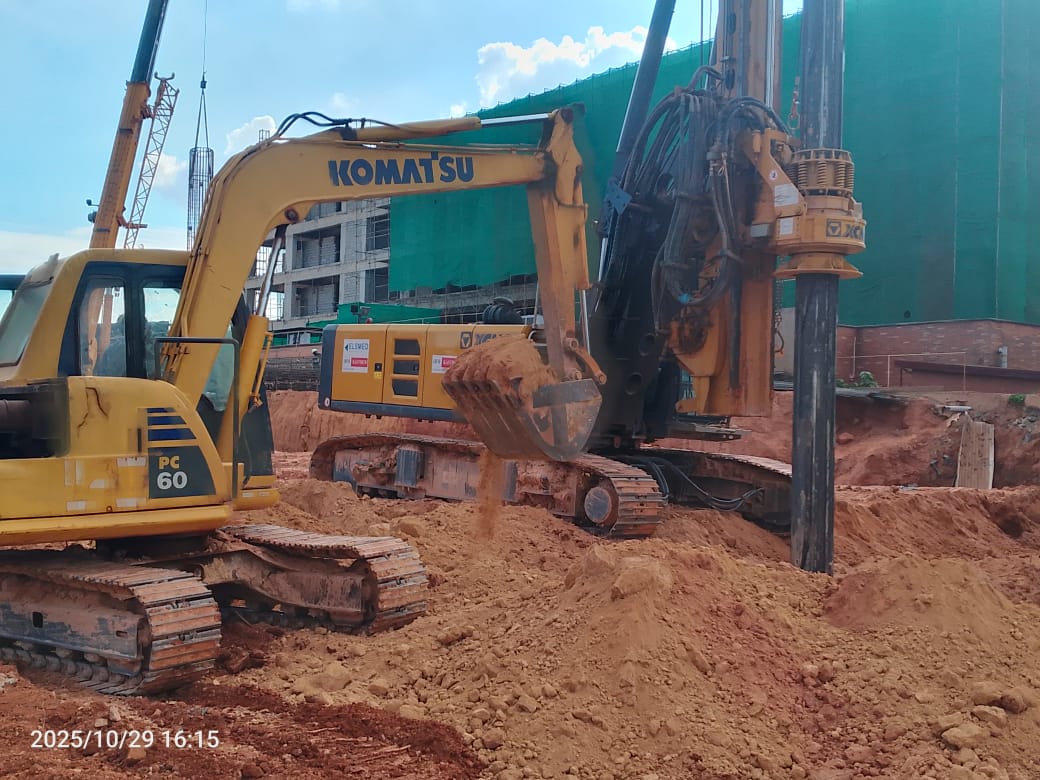
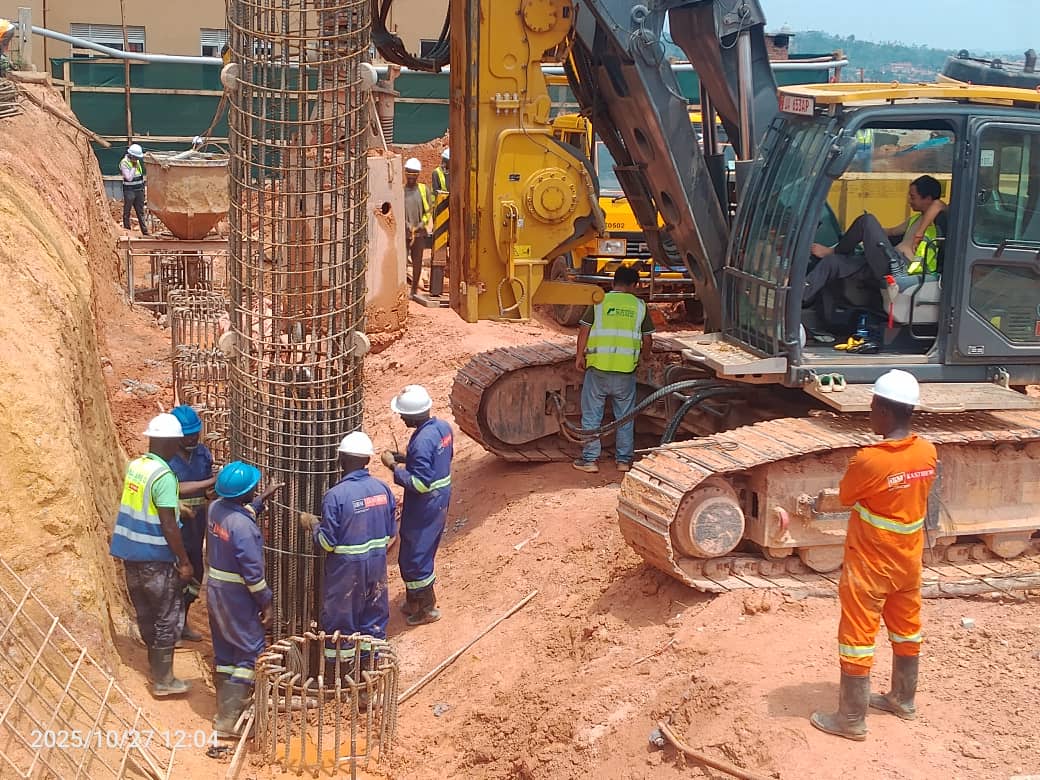
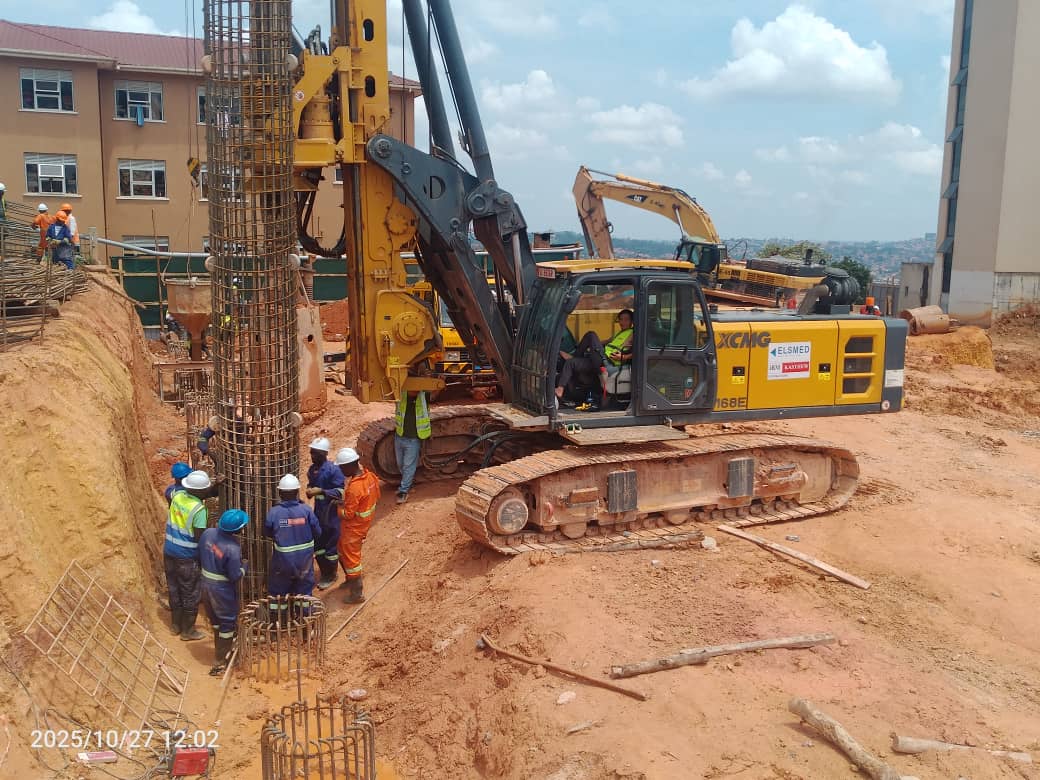
These machines offer a very wide variety of capabilities and we install piles from 250mm diameter, up to 1650mm diameter within Uganda. These machines are fast, mobile and reliable. Various configurations are available and we have got them all, from single kelly to double kelly machines, some of which have been modified to work in restricted headroom conditions
Deep Foundation Piling Techniques
Franki piles
Franki piles, also known as a driven cast in-situ pile (DCIS), are high-capacity, cast-in-place elements constructed using a drop weight and casing.
Common uses
Provide structural support
Process
A 400mm to 600mm diameter steel casing is vertically positioned at a planned location. Gravel/sand or very dry concrete mix is introduced into the bottom of the casing and a steel hammer with a diameter slightly smaller than the casing then repeatedly dropped inside. The mix locks into the bottom of the casing and the repeated blows of the drop weight advance the casing to the design depth. The casing is stopped from advancing further and additional drops of the hammer eject the dry mix out of the bottom of the casing. Additional dry mix is added and driven from the casing until an enlarged base is formed. Reinforcing steel and concrete are then placed in the casing and the casing is removed.

Advantages
Self-testing pile with excellent compressive and uplift capacities as well as load-deflection characteristic.
.jpg)
Advantages
- Very high load capacity
- Various diameters available from 450mm upwards
- Can be installed in a wide range of soil and rock conditions
- Minimal settlement and deformation
- Minimum vibration
Quality assurance
We use a variety of quality assurance methods for our products including top down and integrity testing, bottom bi-directional pile load tests, and digital recording and logging of the execution parameters.
Bored piles
Bored piles are a very effective, state-of-the-art construction element with many applications in foundation and civil engineering.
Common uses
As heavy foundations, securing deep excavation especially close to existing buildings as well as stabilising and retaining slopes.In a variety of infrastructure projects such as tunnelling, road or bridge construction as well as flood protection. Transfer to deep rock or competent soils and withstand high loads Retain ground alongside an excavation pit or close to adjacent buildings, often combined with other techniques such as ground anchors or soil nails For slope stabilisation to prevent landslides, or protect existing buildings.
Process
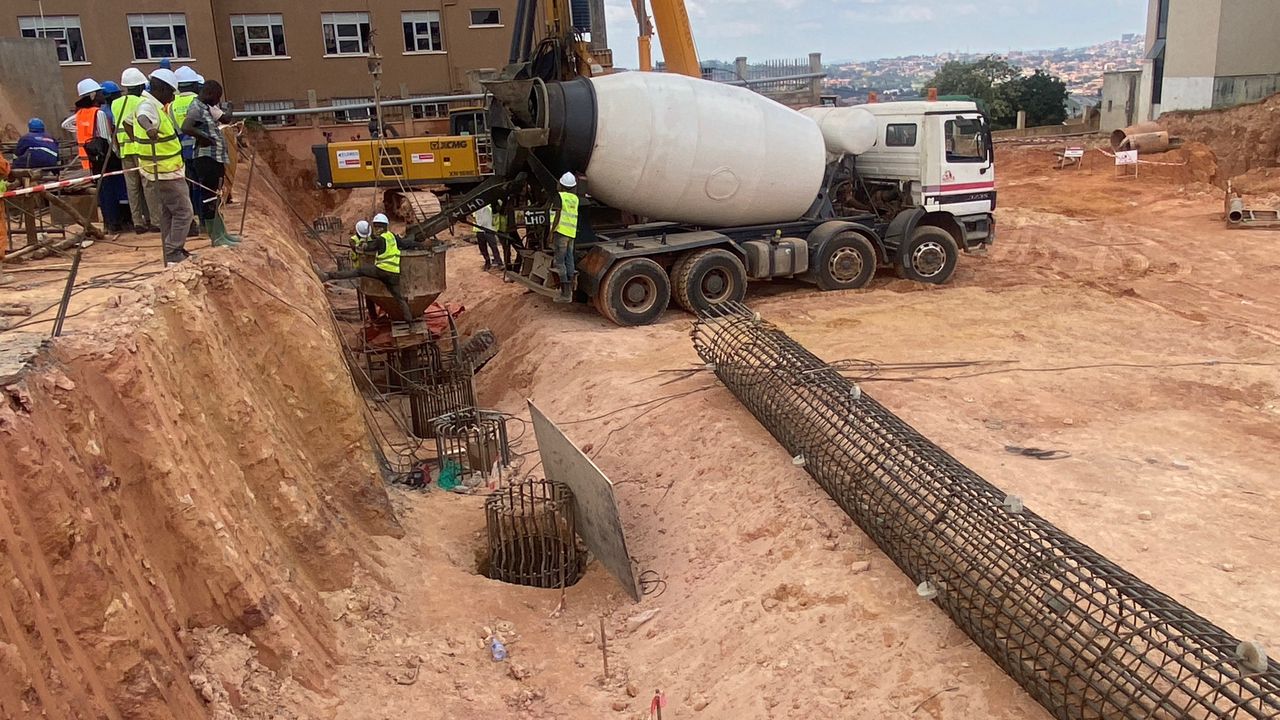
A temporary casing is installed and soil drilled out using specialized tools. If the hole requires support to remain open, additional casing or drilling fluid can be used. Full length reinforcing steel is lowered into the hole which is then filled with concrete. Bored piles can be drilled to depths in excess of 60m and typical diameters range up to 2.4m.
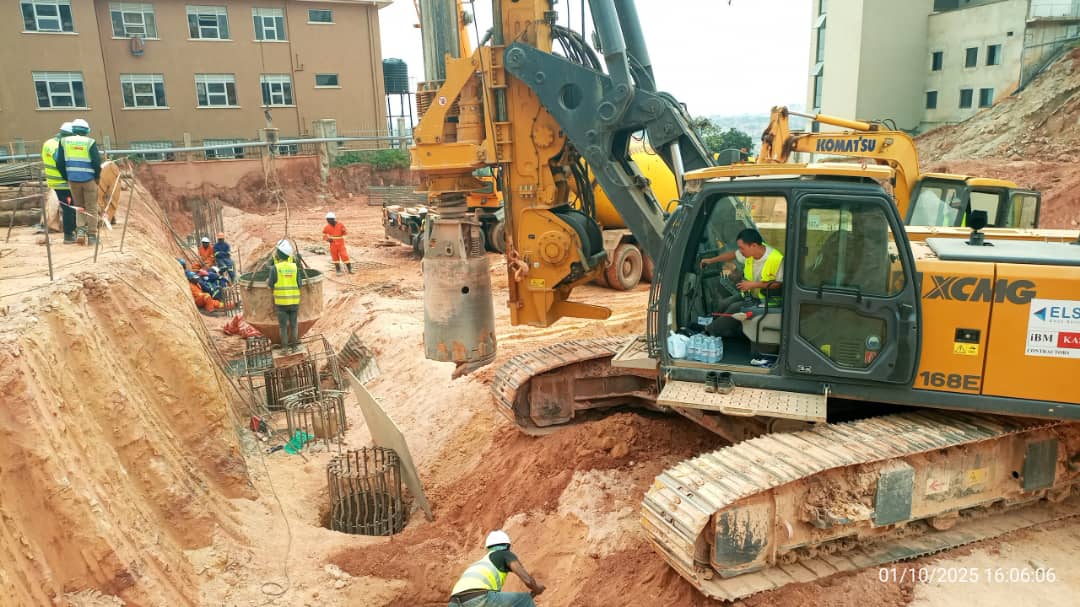
Bored Piles – Cased
Bored piles are a very effective, state-of-the-art construction element with many applications in foundation and civil engineering. Temporary and permeant steel casings are used for a number of engineering reasons.
Common uses
- Ensuring critical verticality tolerances are achieved to protect existing buildings or underground structures.
- To achieve adequate pile overlap at depth when installing an interlocking (secant) pile wall Where greater lateral and shear capacity are needed for slope stabilisation or prevention of landslides.
- To bypass pile loads into unsuitable strata and avoid negative skin friction.
- To temporarily support an open bore at depth.
- To facilitate pile cut off levels above working platform level.
Process
A casing is installed by rotation, oscillation or vibration, soil drilled out using specialised tools, and additional lengths of casing(s) jointed and installed to a predetermined depth. Full length reinforcing steel is then lowered into the hole which is then filled with concrete. Temporary casings are then recovered.
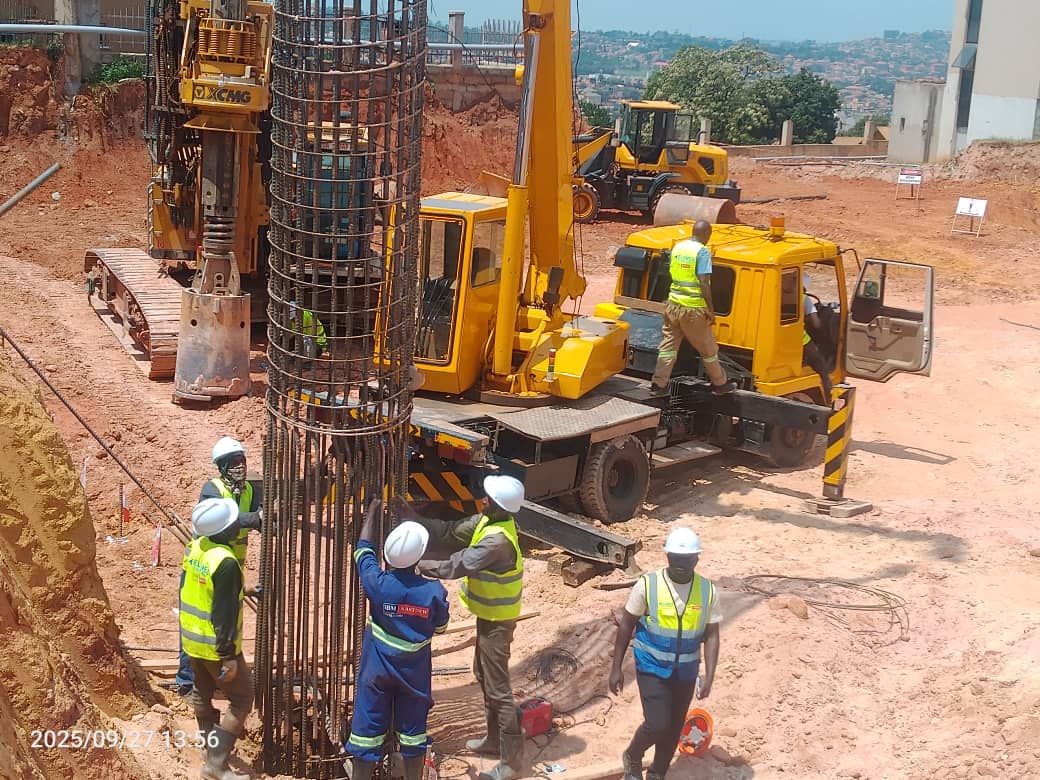
Adnantages
- Can support high loads.
- Can transfer loads.
- Can achieve strict tolerances for verticality.
- Various diameters available from 450mm upwards.
- Minimal settlement and deformation.
- Minimum vibration.
Quality assurance
iBM-KASTHEW PILING UGANDA uses a variety of quality assurance methods for our products including top down and integrity testing, bottom bi-directional pile load tests, and digital recording and logging of the execution parameters. A range of digital and physical tools including inclinometers, guide walls and GPS equipped total stations can be used to assure plan position and verticality.
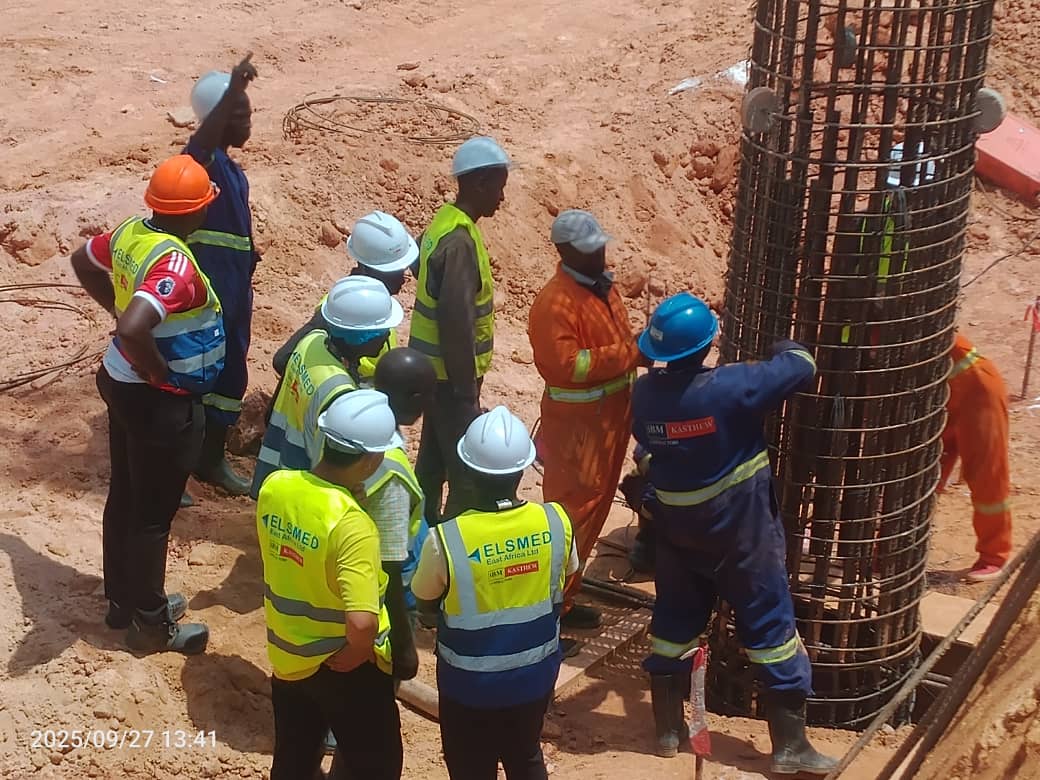
Process
CFA piles are constructed by rotating a hollow stem continuous flight auger into the soil to a designed depth. Concrete or grout is pumped through the hollow stem, maintaining static head pressure, to fill the cylindrical cavity created as the auger is slowly removed. The reinforcement cage is placed through the freshly placed concrete. Typically, iBM-Kasthew Piling Uganda CFA piles are reinforced with a rigid six metre-long cage as a minimum, but it’s possible to install much longer cages as and when required by the design or specification. If required, a specially developed vibrator unit can help accurately locate the reinforcement cages.
CFA piles (Auger Cast)
Continuous flight auger (CFA) piles are a type of bored cast-in-place replacement pile. Piles are drilled and concreted in one continuous operation enabling much faster installation time than for other piles of this type. Reinforcement is placed into the wet concrete after casting, enabling the pile to resist the full range of structural loading.
Common uses
- Provide structural support.
- Provide earth retention, especially on site boundaries or close to adjacent buildings.
- Prevent landslides or protect existing buildings and are often combined with other techniques such as ground anchors or soil nails.
- Infrastructure projects such as tunnelling, road or bridge construction as well as flood protection.
Advantages
- Resists compressive, uplift, and lateral loads.
- A cost efficient foundation solution.
- Can be installed in most soil conditions such as sands, clays, silts, gravels and soft rock.
- Can achieve pile depths in excess of 30m + and with various diameters of 300 mm to 1000mm+.
- Low noise levels and no vibration so ideal in built-up areas with weak soil conditions and high levels of ground water.
- Compared to bored piles, construction is very quick as temporary casings or support systems are not required.
Rota piles
Rotapiles uses down-the-hole (DTH) air driven hammer to advance casing during drilling, specifically for penetration through boulder profiles or hard rock socketing.
Common uses
- As foundation elements for variety of structures which require penetration through boulder profiles or hard rock socketing.
- Effective piling solution for river bridges and structures where alluvial/colluvial boulder profiles are present.
- Effective piling solution in dolomitic or karst topography.
- For piles which require large rakes or horizontal load capacities (when incorporating permanent casing)
Process
Down the hole (DTH) hammers are used to advance casing and penetrate the overburden soil. Once rock is reached the socket can be drilled uncased. The pile hole is flushed clean before full length cage is placed and the pile is grouted from the base with a tremie pipe. The casing can be removed after grouting or left in place and incorporated into the pile design. Pile diameter up to 600mm is typically available with capacities up to 3500kN.
Advantages
- Penetration through boulder profiles.
- Hard rock socketing.
- High lateral/bending capacities (when incorporating permanent casing).
- High vertical load capacities.
Quality assurance
We use a variety of quality assurance methods for our products including top down and integrity testing and recording and logging of the execution parameter
.jpg)
.jpg)
Micropiles
Micropiles, also known as minipiles, pin piles, needle piles, and root piles, are a deep foundation element constructed using high-strength, small-diameter steel casing and/or threaded bars.
Common uses
- Provide structural support to most structures.
- Underpin foundations.
- Enhance mass stability.
- Transfer loads.
Process
The casing, with a diameter generally in the range of three to 10 inches is advanced to the design depth using a drilling technique. Reinforcing steel, typically an all-thread bar, is inserted into the micropile casing and high - strength cement grout pumped in. The casing may extend to the full depth or end above the bond zone with the reinforcing bar extending to the full depth. Capacities vary depending on the micropile size and subsurface profile but compressive capacities of more than 500 tons have been achieved.
Advantages
- Resists compressive, uplift/tension, and lateral loads.
- Can be installed in restricted access and low headroom sites with minimal disruption to operations.
- May avoid utility re-routing.
- Alleviates quality assurance concerns associated with cast-in-place piling in weak soils
- Can be combined with other techniques to meet unique or complex project requirements cost - effectively and efficiently
Quality Assurance
iBM-Kasthew Piling Uganda has vast load test experience in various rock formations and the ability to design in-house based on various subsurface conditions.
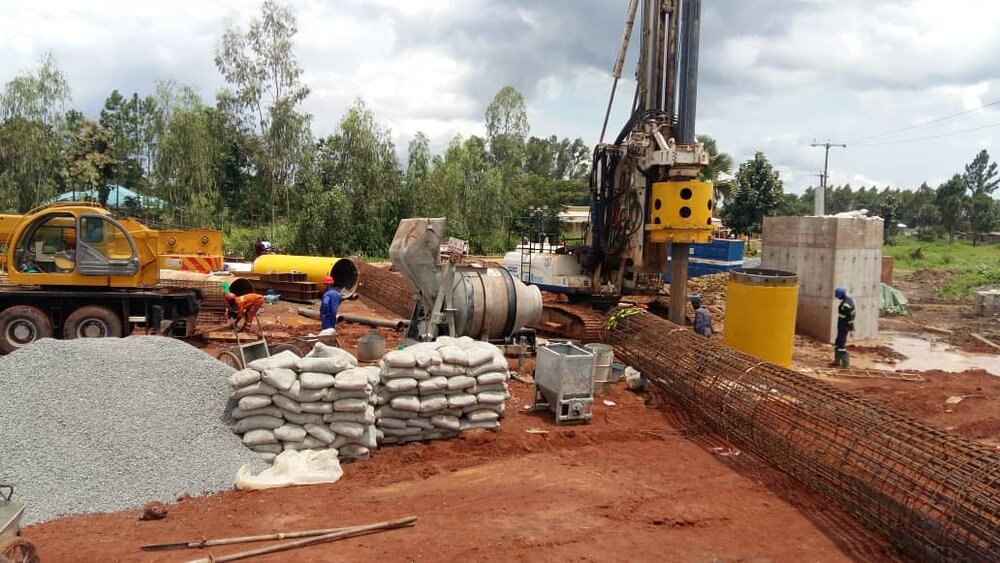
Ductile iron piles
Ductile piles are a deep foundation method using the displacement technique with prefabricated piles made of ductile cast iron available in 118 mm and 170 mm diameters with different wall thickness.
Common uses
- Industrial and commercial buildings.
- Warehouses.
- Foundations for pipelines.
- Storage tanks and terminals.
- Bridge constructions.
- Residential buildings.
- Slope stabilisation.
- Public buildings.
- Pylons for electricity, cellular transmitters.
- Can be grouted with mortar to take tension loads as well or to counteract corrosion.
Process
A driving shoe is placed after preparation of the working platform and pre excavation of the footings. The ductile pipes are about 5 metres long and formed with a shock sleeve. The first pipe is installed into the driving shoe and then one pipe after the other stuck together and driven down until driving criteria is reached. If there are grouted piles to perform, the first pipe is cut close to the driving shoe so that the mortar is able to full fill the free space between the pipe and the soil performed by a larger diameter of the driving shoe. Diameters from 200 mm up to 370 mm are normal depending on the soil conditions Directly after installing the piles, the pile heads designed as steel load spreading plates are placed on the ductile pipes.
Advantages
- High production rate per shift, average app. 350 lm / shift.
- No spoil.
- Can perform a pressure load capacity of 250 kN up to 1000 kN per pile.
- Can make the optimum pile length according to load and soil conditions
- Can be a good alternative to micropiles
Quality Assurance
iBM-Kasthew Piling Uganda is very experienced in installing ductile iron piles, having installing several million linear metres over time. The load capacity of each pile can be controlled with driving criteria and the optimum pile length achieved.